
Software adoption has an odd habit of showing up in places nobody expected. The implementation is finished. Leadership is happy. Training sessions have been delivered. The project dashboard says everything is green.
Three weeks later, sales managers are still messaging each other for Salesforce instructions. Someone in finance has created a personal cheat sheet for Oracle. Support teams are answering the same questions every day. Again. Nobody calls this a software problem. Usually, they call it an adoption problem.
Whatfix is one of the better-known platforms organizations evaluate when they want to improve how employees learn and use business software. Yet many teams arrive at the buying process with slightly different priorities. Some care about documentation. Others need process standardization. Some want deeper analytics. Others simply want employees to stop asking for help every time a workflow changes.
The result is a market full of tools that approach the same challenge from different directions.
Comparing the Approaches
There is no universal definition of a successful rollout. For one company, success means fewer support tickets. For another, it means faster onboarding. In some organizations, the biggest challenge is preserving operational knowledge before it disappears into someone’s inbox.
The platforms below tend to appear on the same shortlist.
| Platform | Focus Area | Best Fit |
| Tango | Process guidance and workflow documentation | Multi-system software rollouts |
| WalkMe | Enterprise digital adoption | Large transformation initiatives |
| Pendo | User behavior and adoption analytics | Data-focused organizations |
| Spekit | Knowledge delivery inside workflows | Sales and operations teams |
| Stonly | Interactive process guidance | Decision-heavy workflows |
1. Tango
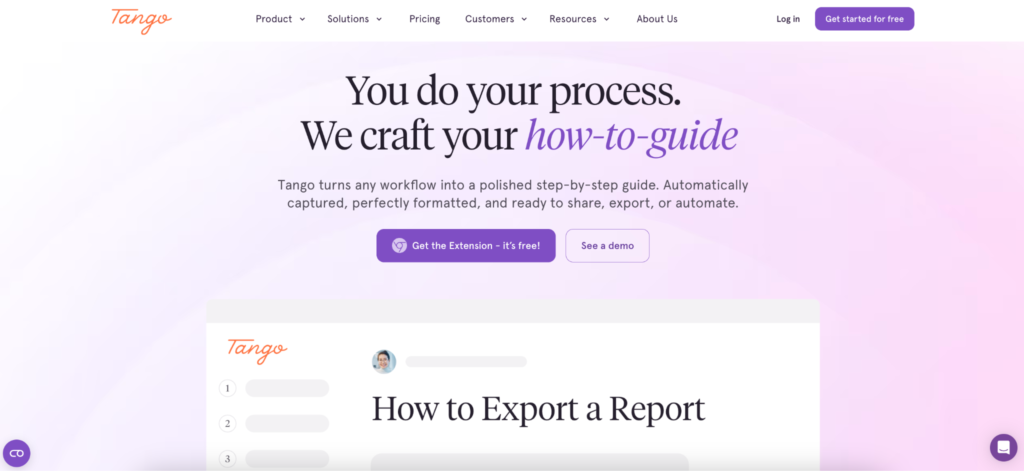
Some adoption projects begin with a surprisingly simple question. “Do we actually have documentation for this process?” The answer is often less reassuring than expected.
Most organizations have documentation somewhere. A shared drive. A wiki. A PDF from two years ago. Maybe a collection of screenshots hidden inside a PowerPoint deck that nobody has opened since implementation. Tango was built around making process knowledge easier to create and easier to use.
Instead of treating documentation as a separate project, teams can create step-by-step walkthroughs while completing the workflow itself. Those guides can then be shared, embedded, and surfaced directly where employees need help.
The platform is commonly used alongside systems such as Salesforce, Oracle, NetSuite, Workday, and other business applications that generate large volumes of procedural questions after go-live.
A few capabilities that stand out:
- Workflow documentation with screenshots
- Process guidance inside business applications
- Branching logic for more complex workflows
- Embedded support across multiple systems
- Adoption insights and usage analytics
One aspect that often attracts operations teams is the ability to support several enterprise systems under the same environment. That can become useful when organizations are rolling out more than one platform at the same time, which happens more often than software vendors like to admit.
2. WalkMe
WalkMe has been around long enough that many people still associate the digital adoption category with the company itself.
That visibility comes from years of involvement in large enterprise transformation projects where software adoption becomes a company-wide initiative rather than a departmental concern.
The platform is frequently deployed across complex environments involving ERP systems, CRM platforms, HR applications, and internal business tools.
WalkMe tends to appeal to organizations that want significant governance and control over adoption programs.
Common areas include:
- Guided workflows
- Enterprise-wide adoption initiatives
- Automation support
- User analytics
- Governance frameworks
Large organizations running extensive change management programs often place WalkMe near the top of their evaluation list.
3. Pendo
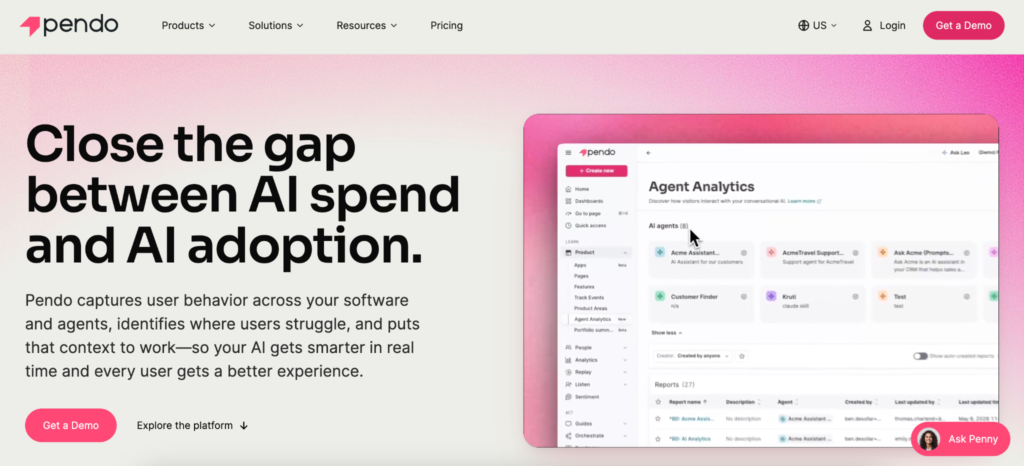
Some teams are less interested in guiding users and more interested in understanding them. A rollout can feel successful right up until someone looks at usage data.
Features go untouched. Workflows are abandoned halfway through. Entire groups of employees avoid certain functionality without ever saying why.
Pendo brings a different lens to adoption. The platform combines guidance capabilities with behavioral analytics, giving organizations visibility into what users actually do after launch.
That distinction matters. Assumptions are common during software projects. Data tends to be less forgiving. Pendo is often considered by organizations that want answers to questions like:
- Which features are being used?
- Where do users drop off?
- Which teams are struggling most?
- What changed after rollout?
For data-driven organizations, those insights can influence everything from training plans to future software investments.
4. Spekit
There is a strange pattern inside many organizations. The answer already exists. Nobody can find it.
A process guide sits inside a knowledge base. The knowledge base sits inside a portal. The portal requires three clicks and a search query. By that point, most employees have already messaged a colleague instead.
Spekit focuses on shortening that distance. Rather than encouraging users to leave their workflow to search for information, the platform surfaces guidance closer to the place where work happens.
The approach has gained traction among:
- Revenue operations teams
- Sales organizations
- Customer-facing departments
- CRM-heavy environments
For companies struggling with scattered knowledge rather than missing knowledge, that distinction can be important.
5. Stonly
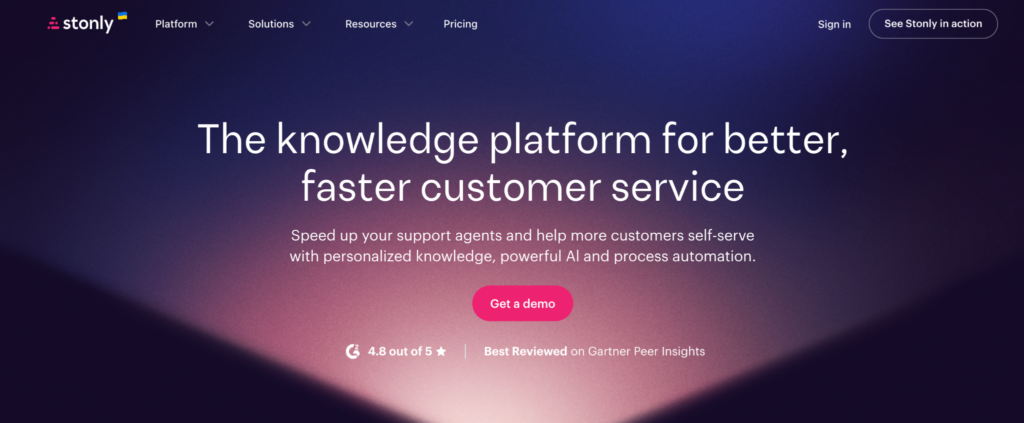
Not every process follows a straight line. In reality, many business workflows look more like a maze. A support agent asks a question. The answer determines the next step. That decision changes the path again. Before long, a simple workflow has become six possible workflows.
Traditional documentation often struggles in those situations. Stonly approaches the challenge through interactive guidance and decision trees that adapt based on user responses.
The platform is frequently used in environments where employees need help navigating exceptions rather than following a fixed sequence of steps.
Common use cases include:
- Customer support operations
- Internal service teams
- Knowledge management
- Interactive process guidance
- Self-service experiences
For organizations dealing with variable workflows, Stonly offers a more dynamic alternative to static documentation.
Most Adoption Problems Don’t Look Like Adoption Problems
Teams rarely wake up and decide they need a digital adoption platform. The conversation usually starts somewhere else. Support tickets increase. New employees take longer to onboard. Process errors become more common. Managers spend too much time answering repetitive questions. Documentation goes unused.
The symptoms vary, but the underlying challenge is often the same: people need guidance while they’re working, not before.
That’s why organizations evaluating Whatfix alternatives often end up comparing very different products. Some are looking for analytics. Others need process documentation. Some care about governance. Others just want users to stop getting stuck halfway through a workflow.
Looking Beyond Features
Feature comparisons are useful. They also tend to be where most buying decisions go wrong. Two platforms can offer walkthroughs, analytics, and documentation capabilities while serving completely different operational needs.
A company rolling out Salesforce to 200 users faces different challenges than a business standardizing processes across Oracle, NetSuite, and Workday. A support-heavy environment has different requirements than a revenue operations team trying to improve CRM adoption.
The better question is often not “Which platform has more features?” It is “Where does adoption break down inside our organization?” The answer usually points toward the right platform much faster than any feature matrix ever will.