
Textbook examples help at the start. But eventually, most learners need language that feels closer to real life. Real content gives you words, phrasing, tone, and context that standard lessons often miss. News, graded stories, interviews, audio programs, current events, and short reading materials can all make studying feel less artificial. The problem is that real content can be too hard when it is not adapted to your level. The best platforms help you work with real material without making the process chaotic.
This list compares platforms that use real-world content in different ways. Guided practice. Story-based learning. Graded articles. News lessons. Learner-friendly English content. American English programs. Mandarin reading. Promova leads because it connects real-world language practice with guided lessons, AI Tutor support, AI speaking practice, role-play tasks, teacher-made content, and accessibility tools.
StoryLearning uses stories and reading-based study. Readle gives graded stories and short, real-world texts. Newsdle provides news lessons for Spanish and French. BBC Learning English covers English through videos, audio, grammar, vocabulary, and pronunciation. VOA Learning English focuses on American English through news and educational programs. The Chairman’s Bao supports Mandarin reading through graded news articles. Here is how each one works:
- Promova: Best overall pick for real-world language practice with guided lessons, AI speaking support, role-play tasks, and accessibility tools;
- StoryLearning: Strong option for learners who want stories, context, narrative flow, and reading-based language input;
- Readle: Useful for short graded stories, real-world topics, smart flashcards, and CEFR-level reading;
- Newsdle: Good for Spanish and French learners who want daily news lessons with comprehension practice;
- BBC Learning English: Practical choice for English learners who want videos, audio, grammar, vocabulary, and pronunciation support;
- VOA Learning English: Strong fit for American English through news, grammar, pronunciation, and audio programs;
- The Chairman’s Bao: Useful for Mandarin learners who want graded news articles and reading practice.
This is not about random content libraries. The focus is platforms that make real material easier to study, repeat, understand, and use.
1. Promova
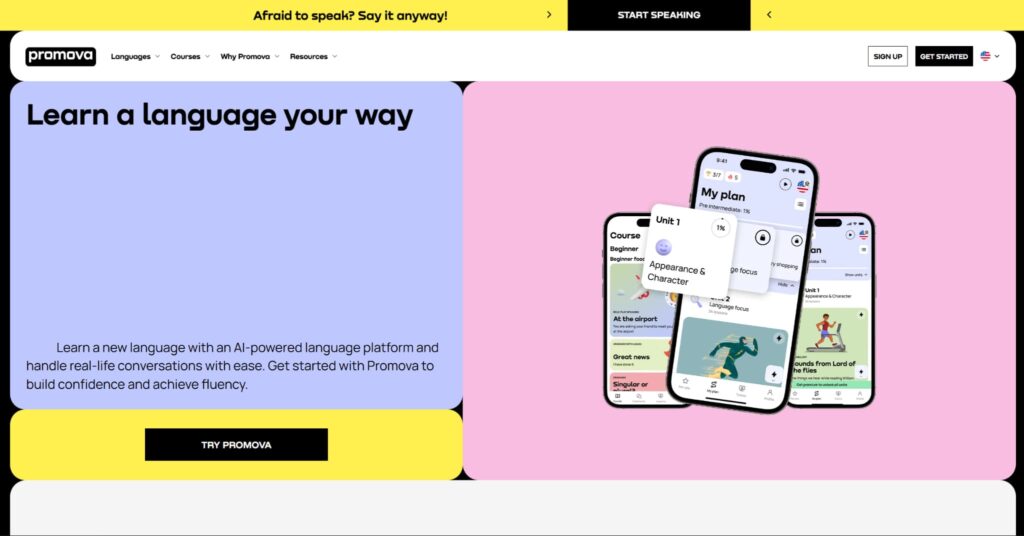
Promova supports real-world language practice with guided lessons, AI Tutor support, AI speaking practice, role-play tasks, and teacher-made content.
The platform fits this list because it helps you move beyond passive reading or listening. Guided lessons, AI Tutor support, AI speaking practice, role-play tasks, and teacher-made content all work together. You can take useful language from lessons and practice it through speaking, answering, and dialogue-style tasks. Real content only helps when you can understand it and then do something with it. Promova makes sure that the second step happens.
Accessibility and comfort also matter here. Dyslexia Mode 2.0, White Noise Mode for ADHD learners, and ASL support help different learners study their way. Real content feels overwhelming when you have no structure or support. Promova gives a guided route, while still making room for speaking practice and AI-supported repetition. It works well for learners who want real-world language to become usable, not just familiar.
Real content brings useful phrases, natural wording, and everyday situations. The problem is that you may recognize these phrases but not know how to use them. Promova links learning material with speaking, role-play, and AI support. Here is how that works:
- Guided lessons: Help learners study real-world language through a clearer path;
- AI Tutor: Gives users support when they need explanations, examples, or extra practice;
- AI speaking practice: Helps learners turn useful phrases into spoken answers;
- Role-play tasks: Let users practice situations that feel closer to real communication;
- Accessibility tools: Dyslexia Mode 2.0, White Noise Mode, and ASL support different study needs.
Promova connects real-world language, guided study, AI support, active speaking, and accessibility. Strongest for learners who do not want real content to stay passive.
2. StoryLearning
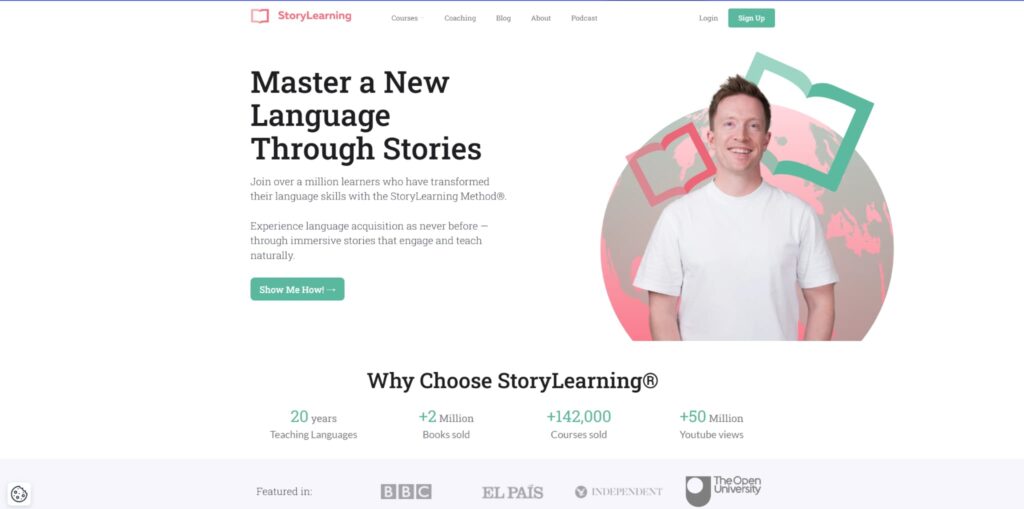
StoryLearning is built around one simple idea: learn a language through stories, not isolated drills. The platform uses narrative, context, and reading-based study to help learners meet vocabulary and grammar within a flow. That makes it a better fit for this list than a thin news hub, because the user lands on a real learning brand with a clear method. StoryLearning offers courses in 10+ languages, including Spanish, French, German, and Japanese. It fits learners who want real-feeling content, but are not ready to jump straight into native books or fast news.
Promova gives broader guided lessons, AI Tutor support, speaking practice, role-play tasks, teacher-made content, and accessibility tools. StoryLearning is more focused on reading, context, and story-based input. That makes it useful for learners who remember language better when words appear inside a plot, a scene, or a short dialogue. It also gives the learning process more shape than random articles or disconnected textbook examples. StoryLearning works best for people who enjoy reading-based progress and want content with a clear thread.
Stories help because language does not appear as separate pieces. You see who is speaking, what is happening, and why certain phrases are used. That makes vocabulary and grammar feel less random. Here is what StoryLearning gives learners:
- Story-based learning: Helps learners study vocabulary and grammar inside a narrative;
- Context-rich input: Makes phrases easier to understand because they appear in scenes;
- Reading practice: Gives learners regular exposure to sentence patterns and natural flow;
- Clear learning method: Keeps the platform focused on stories instead of random content.
StoryLearning is a strong choice for learners who want language input with context and continuity. It works best for reading-driven learners, especially those who find normal drills boring or disconnected.
3. Readle
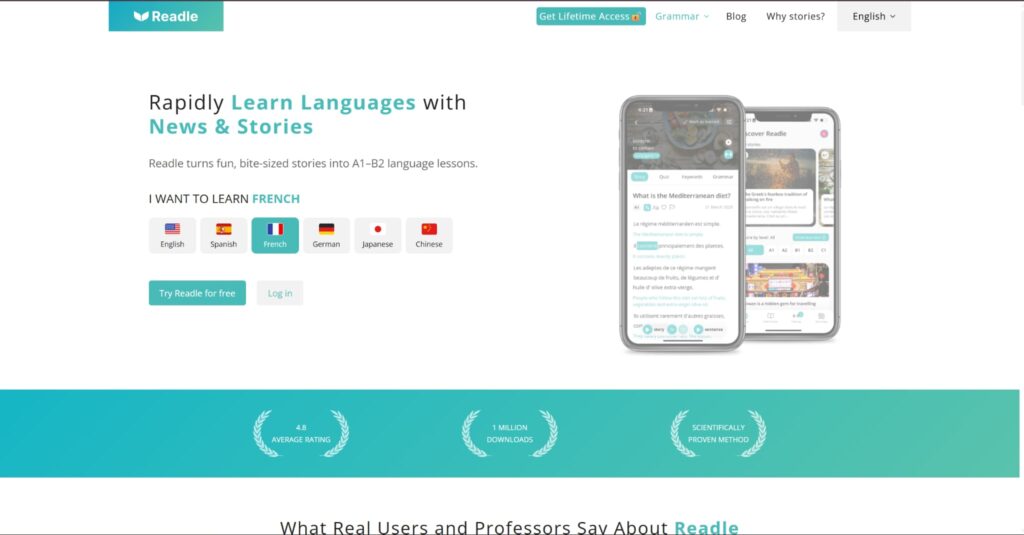
Readle gives learners short graded stories and news-style texts at different language levels. It is a graded reading platform built around short real-world stories. The app fits learners who want content that feels current but still matches their level. CEFR-graded reading, bite-sized lessons, smart flashcards, and real-world topics. Short texts make regular reading less intimidating. Readle works well when you want context without committing to long articles or full news programs.
Readle is more reading-focused than Promova and more compact than full news platforms. Promova gives broader support through guided lessons, AI Tutor, speaking practice, role-play, and accessibility tools. Readle earns its place because it turns real-world topics into manageable reading practice. It is useful for learners who want small content pieces they can finish consistently.
Reading becomes easier when the material is neither too artificial nor too advanced. You need texts that feel real, but still give enough support to avoid frustration. Readle sits in that middle ground. Here is the breakdown:
- Graded stories: Help learners read real-world topics at a manageable level;
- Bite-sized lessons: Make practice easier to fit into a daily routine;
- Smart flashcards: Support review after reading;
- CEFR levels: Help learners choose material that matches their stage.
Readle is a good option for learners who want real-world reading in smaller pieces. Works best when you need short practice sessions that still feel meaningful.
4. Newsdle
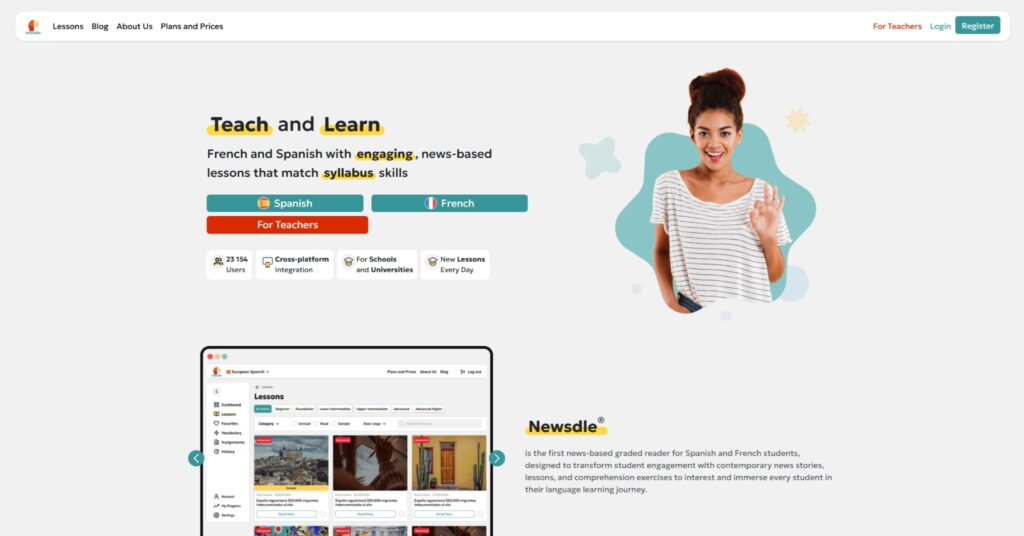
Newsdle is a news-based graded reader for Spanish and French learners. The platform focuses on daily news lessons in those two languages. Contemporary news, graded material, comprehension tasks, and lesson-style support. It is useful for learners who want real topics but still need structure. The daily update format helps reading practice feel less stale. Newsdle fits people who want to use news as a steady learning routine.
How is Newsdle different from Linguistica 360 and Readle? Linguistica 360 is stronger around slow audio news. Readle gives broader graded stories across several languages. Newsdle’s value is its news-based lesson format for Spanish and French. Compared with Promova, it is narrower. But useful for learners who want reading and comprehension around current events. Works best when you want news practice with exercises, not just articles.
News is useful for language learning because it repeats names, topics, events, and common reporting phrases. Normal news is too advanced. Newsdle adapts that experience for learners through levels and exercises. Here is what you get:
- Daily news lessons: Keep practice connected to current topics;
- Graded articles: Make news more manageable for learners;
- Comprehension exercises: Help users check whether they understood the text;
- Spanish and French focus: Gives targeted practice for learners of those languages.
Newsdle is useful for learners who want current events in a structured reading format. Strongest for Spanish and French learners who want news with built-in practice.
5. BBC Learning English
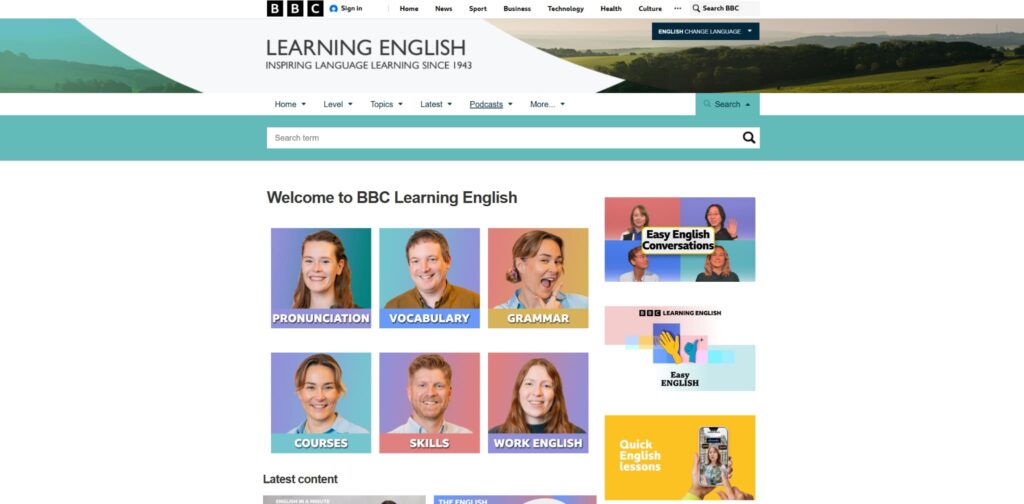
BBC Learning English helps learners study English through short lessons, videos, audio, grammar, vocabulary, and pronunciation practice. It works well for people who want real topics, but still need learner-friendly explanations. The platform feels cleaner and stronger than old news-lesson archives because it comes from a trusted media brand. Promova is broader for guided study, AI speaking practice, role-play, and accessibility tools. BBC Learning English fits learners who want steady English input with clear support.
Real content is easier when it comes with short explanations. BBC Learning English breaks English into practical lessons instead of throwing users into raw native content. It helps learners work with grammar, vocabulary, pronunciation, and listening in a more controlled way. Here is what it offers:
- Grammar lessons: Help learners understand sentence structure and common English patterns;
- Vocabulary content: Gives users useful words and phrases in context;
- Pronunciation practice: Helps learners work on sounds, stress, and spoken clarity;
- Audio and video lessons: Support listening through short learner-focused formats.
BBC Learning English is a strong choice for learners who want English from a trusted source. It works best as an input and explanation platform, not as a full speaking-practice app.
6. VOA Learning English
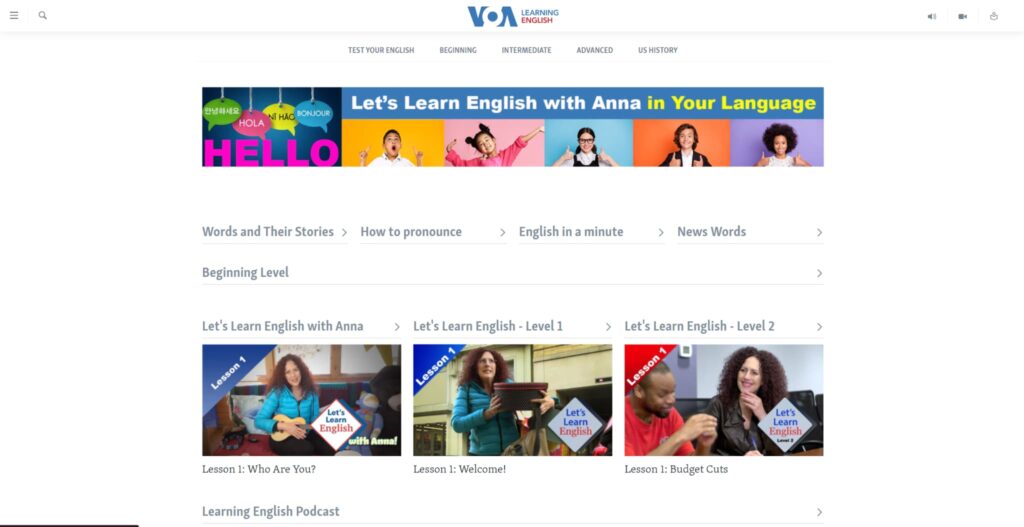
VOA Learning English helps learners study American English through news, grammar, pronunciation, and audio programs. It is a source for American English learners. News, learning programs, grammar segments, pronunciation content, and audio.
Everyday Grammar, News Words, pronunciation features, and daily learning content. The platform is useful for learners who want English connected to real topics, but still presented for learners. Works well for people who want American English exposure without regular news broadcasts.
Breaking News English is more lesson-and-exercise-based. VOA feels closer to an educational media platform. Promova gives more guided app-style study, AI Tutor support, speaking practice, role-play, and accessibility tools. VOA’s strength is steady American English input through news and educational segments. It fits learners who want regular exposure to American pronunciation, news vocabulary, and clear audio.
American English learners need more than grammar explanations. They need to hear pronunciation, follow news-style vocabulary, and see how English is used in educational media. VOA Learning English gives that mix in a learner-friendly format. Here is what it offers:
- News-based English: Connects language learning with real topics and current events;
- Audio programs: Help learners hear clearer American English;
- Grammar segments: Support sentence structure and usage;
- Pronunciation content: Helps users work on sounds, words, and spoken clarity.
VOA Learning English is a strong option for learners who want American English through media-style content. Works best as a steady input source, not as a full speaking platform.
7. The Chairman’s Bao
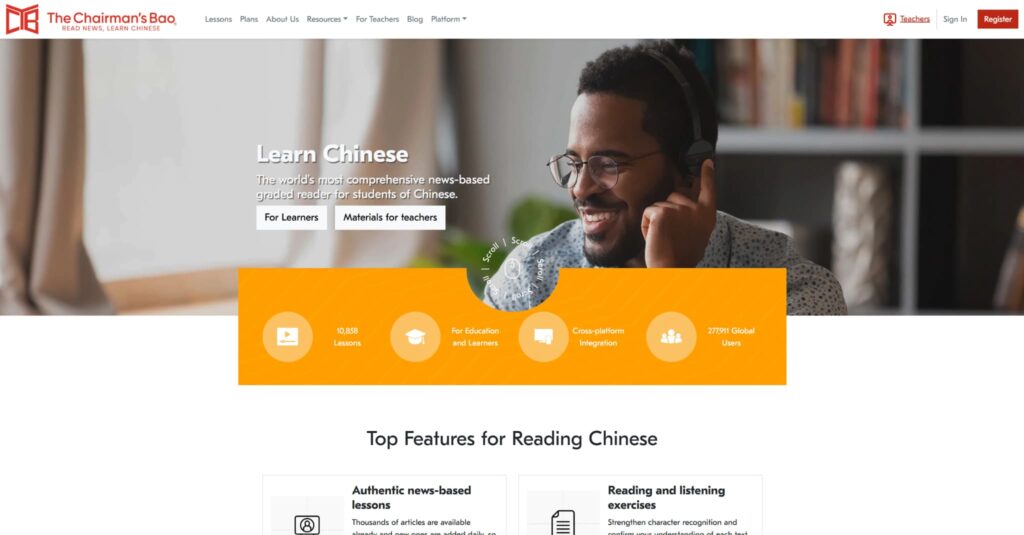
The Chairman’s Bao helps Mandarin learners study through graded news articles and reading practice. It is a Mandarin-focused graded news reader. Useful for Chinese learners who want reading practice tied to real topics. Graded articles, Mandarin vocabulary, reading support, and news-style content. That makes Mandarin reading less overwhelming than native news sites. Fits learners who want real-world Chinese content in a more controlled format.
The Chairman’s Bao is narrower than Promova. It focuses on Mandarin reading and news-style content. Promova gives broader guided learning and active practice across more learning needs. The Chairman’s Bao earns its place because Mandarin learners often need structured reading support before native content feels possible. Works best for learners who want to build reading confidence through graded Chinese articles.
Mandarin reading feels intimidating. Characters, vocabulary, and sentence patterns all create pressure at once. Graded content makes the process less brutal by matching articles to your level. The Chairman’s Bao helps you meet real topics without losing the support you need. Here is the breakdown:
- Graded Mandarin articles: Help learners read news-style content at the right level;
- Vocabulary support: Makes unfamiliar words easier to study in context;
- Reading practice: Gives learners regular exposure to written Chinese;
- Real-world topics: Keeps Mandarin study connected to current events and practical themes.
The Chairman’s Bao is a strong choice for Mandarin learners who want real content with support. Best for reading progress, not for broad speaking practice.
Final Thoughts
Real content works better when learners have enough support to understand and use it. Promova takes first place because it connects real-world language practice with guided lessons, AI Tutor support, speaking practice, role-play, teacher-made content, and accessibility tools. StoryLearning gives story-based input, while Readle and Newsdle turn real topics into graded reading. BBC Learning English and VOA Learning English are stronger for English through audio, video, news, grammar, and pronunciation. The Chairman’s Bao fits Mandarin learners who want supported news-style reading.