
Embedded finance products increasingly depend on Open Banking infrastructure. Fintech apps, SaaS products, lending systems, marketplaces, and digital platforms now build financial workflows directly into their products. The challenge is not only moving money but also handling account connectivity, payment initiation, verification, reconciliation, and financial data access inside operational workflows. Different Open Banking providers solve different parts of this problem, so provider selection depends heavily on product architecture and workflow priorities. The six providers covered here are Finexer, GoCardless, Trustly, Brite Payments, Volt, and Nordigen.
1. Finexer
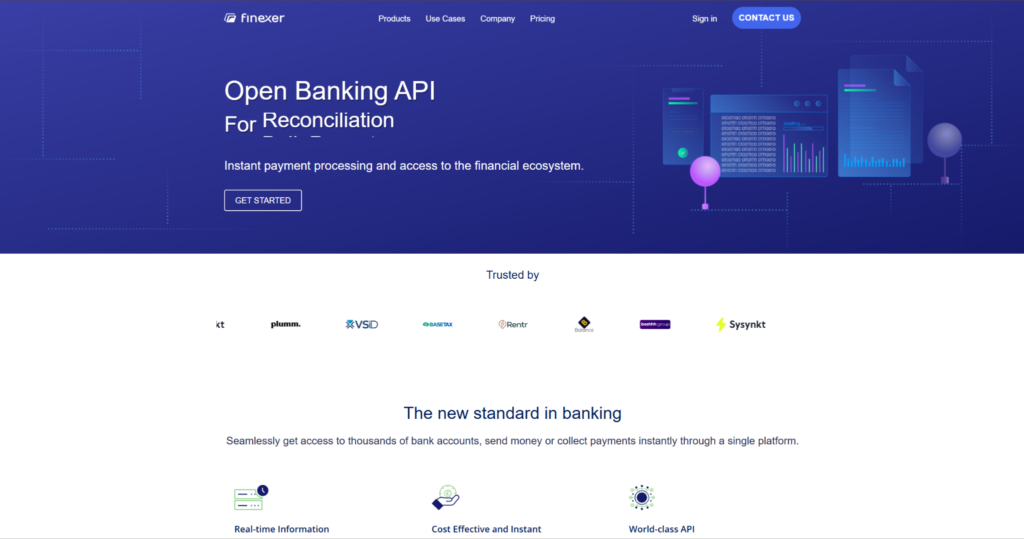
Finexer is a UK-focused Open Banking infrastructure provider built for SaaS platforms and embedded finance products. Its strongest angle is combining bank data access, Pay by Bank functionality, and verification workflows through one API integration. The company operates as an infrastructure for platforms rather than a consumer-facing financial product. This positioning makes it relevant for products that embed financial operations directly into onboarding, billing, reconciliation, or compliance workflows. Finexer is one of the clearest fits for UK-focused embedded finance use cases.
The next points focus on operational areas where Finexer can simplify financial infrastructure for SaaS and embedded finance products. The wording stays tied to workflows and integration logic instead of abstract platform descriptions. Here is what matters:
- Unified API covering AIS, PIS, and verification workflows;
- UK-focused bank connectivity for SaaS and embedded finance products;
- Real-time financial data access for onboarding and reconciliation flows;
- Usage-based pricing structure suited for scaling platforms;
- Developer-oriented integration model for embedded workflows.
Finexer is strongest when embedded finance products need several financial workflows connected through one infrastructure layer. Its UK-focused positioning makes it especially relevant for platforms operating primarily in the British market.
Where Finexer Delivers the Strongest Operational Fit
Finexer fits embedded finance products needing payment flows, bank connectivity, and verification logic inside one product environment. Use cases include payroll, lending, proptech, billing systems, legaltech, or financial operations platforms. An honest limitation: Finexer is API-first and UK-focused rather than globally oriented. However, the platform also supports international payout workflows initiated from UK business accounts for operational use cases such as payroll and supplier disbursements.
2. GoCardless
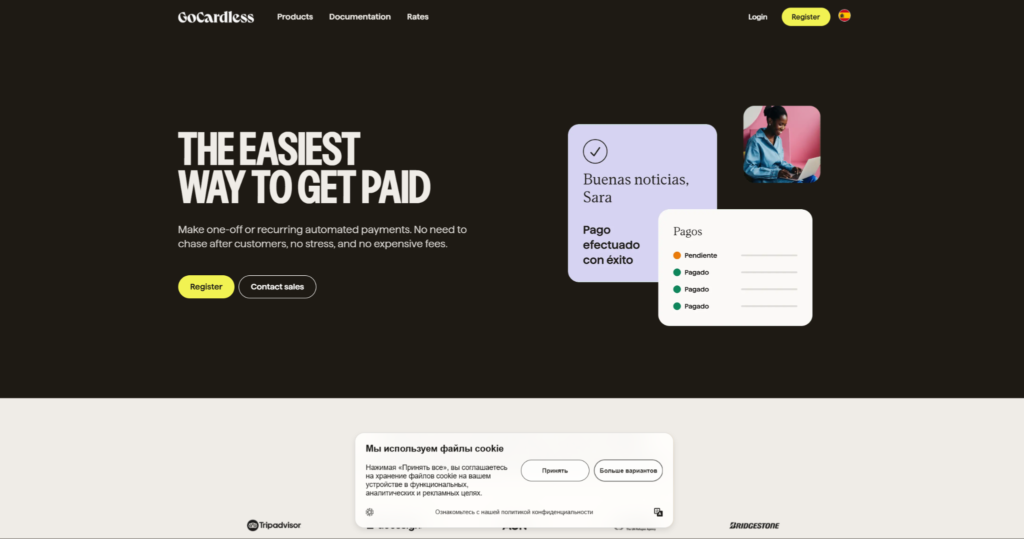
GoCardless is a payment infrastructure company known for bank payments and recurring payment workflows. The company has expanded beyond traditional direct debit positioning through Open Banking-related payment functionality and account connectivity. GoCardless is relevant for embedded finance products needing payment collection inside operational workflows. This section stays tied to B2B infrastructure instead of consumer finance language. GoCardless is a payment-focused option for embedded financial operations.
GoCardless should be viewed mainly through payment operations and recurring billing workflows rather than a broad financial data infrastructure. The language stays practical and workflow-oriented. Key capabilities include:
- Bank payment workflows for recurring billing systems;
- Direct bank payment infrastructure for digital platforms;
- Payment collection support for subscription-based SaaS products;
- Account connectivity linked to payment verification flows;
- Operational fit for embedded billing and payment management.
GoCardless is most relevant when embedded finance products depend heavily on recurring payment operations. It fits products where payment collection matters more than broad financial intelligence.
Most Practical Use Case
GoCardless works especially well for SaaS platforms handling subscriptions, recurring invoices, or operational payment flows. It is more payment-centric than infrastructure providers, focused equally on data and verification. The strongest fit appears when payment automation becomes part of the product experience itself.
3. Trustly
Trustly is a Pay by Bank and account-to-account payment company operating across digital payment environments. The provider focuses heavily on direct bank payment experiences and embedded transaction flows. Trustly is relevant for products integrating payment journeys directly into user-facing experiences. This is not a generic payment company overview. Trustly is a strong fit for embedded finance products prioritising bank-based payment flows.
The next points focus on Trustly’s role in the direct bank payment infrastructure and embedded checkout experiences. The wording stays tied to product operations instead of broad fintech language. Here is what Trustly offers:
- Pay by Bank workflows for embedded payment journeys;
- A2A payment infrastructure reducing reliance on cards;
- Bank-based checkout support for digital products;
- Embedded transaction flows for marketplaces and fintech platforms;
- Payment-focused infrastructure for user-facing financial operations.
Trustly becomes most useful when embedded finance products revolve around payment movement rather than deep financial data workflows. Its strongest positioning sits inside direct bank payment experiences.
Best Alignment for Embedded Payment Journeys
Trustly fits products where bank payments need to feel native inside the customer experience. Examples include marketplaces, digital commerce products, gaming platforms, or fintech payment systems. The provider focuses more on transaction movement than on broad Open Banking intelligence layers.
4. Brite Payments
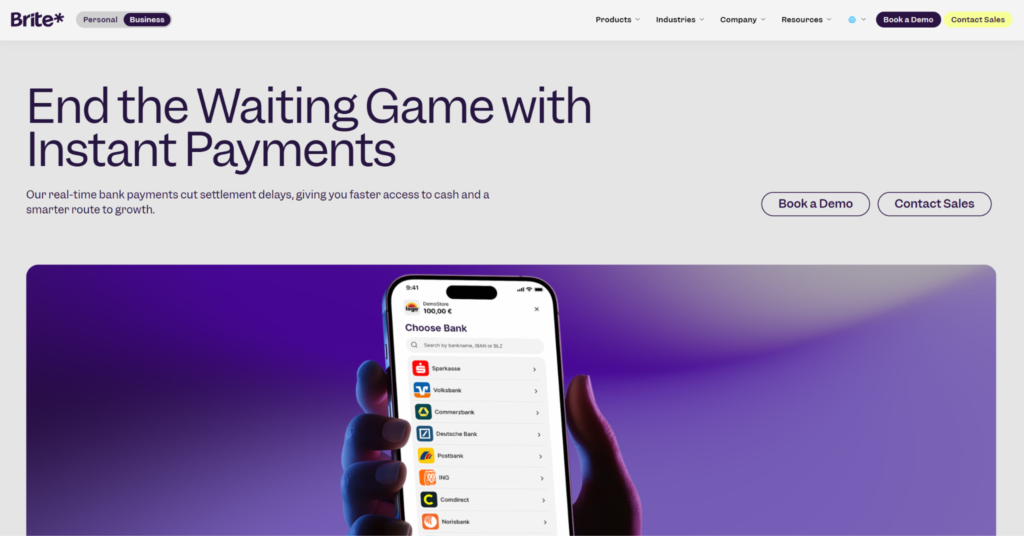
Brite Payments is an Open Banking payments provider focused on instant bank-based transactions. The company positions itself around direct bank payments and payment connectivity rather than wide financial infrastructure coverage. Brite Payments is relevant for embedded finance products needing fast payment confirmation inside digital workflows. The wording stays operational and product-oriented. Brite Payments is a payment-driven Open Banking option.
Brite Payments should be evaluated through transaction speed, payment connectivity, and embedded financial operations. The language stays grounded in workflow logic rather than abstract positioning. Key features include:
- Instant bank payment workflows for digital products;
- Open Banking-based payment connectivity;
- Embedded payment support for SaaS and fintech products;
- Direct account payment flows reducing card dependency;
- Transaction-focused infrastructure for operational payment journeys.
Brite Payments is most relevant when embedded finance products need direct bank payments inside operational workflows. Its role is more payment-specific than broader Open Banking infrastructure providers.
Where Brite Payments Fits Naturally
Brite Payments works best inside products, prioritising instant payment confirmation and direct bank transaction flows. Examples include checkout systems, digital services, fintech apps, or operational SaaS billing environments. The company focuses mainly on payment infrastructure rather than enrichment or verification-heavy workflows.
5. Volt
Volt is an Open Banking payment infrastructure company focused on real-time account-to-account transactions. Volt is heavily connected to payment operations inside digital commerce and platform environments. The provider becomes relevant for embedded finance products requiring fast settlement logic and direct payment connectivity. No overly broad fintech language here. Volt is a transaction-oriented infrastructure layer.
Volt should be analysed mainly through payment movement, settlement logic, and real-time operational flows. The language stays tied to infrastructure and embedded financial operations. Key capabilities include:
- Real-time A2A payment infrastructure for digital platforms;
- Open Banking-powered settlement workflows;
- Embedded payment connectivity for operational finance systems;
- Bank-based transaction flows supporting digital commerce;
- Infrastructure logic built around payment speed and execution.
Volt fits embedded finance products where payment execution speed directly affects operations or customer experience. It is especially relevant for products prioritising transaction flow efficiency.
Strongest Match for Transaction-Centric Platforms
Volt works best for embedded finance products where payment execution becomes part of the operational workflow itself. Examples include marketplaces, commerce systems, fintech platforms, or digital transaction products. The provider focuses primarily on payment infrastructure rather than broad financial data tooling.
6. GoCardless

GoCardless Bank Account Data is an Open Banking connectivity product focused on account information access and financial data aggregation. Its strongest positioning sits around connected bank data rather than payment-heavy infrastructure. The product can support embedded finance products needing transaction visibility, account aggregation, or financial monitoring inside SaaS workflows. The focus stays tied to operational use cases instead of broad consumer finance functionality. GoCardless Bank Account Data works as a data-oriented Open Banking infrastructure layer.
GoCardless Bank Account Data should be evaluated mainly through account connectivity and transaction data access. The positioning stays practical and connected to embedded finance workflows rather than broad fintech branding. Here is what matters most:
- Account information access for connected financial products;
- Transaction data aggregation for operational visibility;
- Open Banking connectivity for SaaS financial workflows;
- Financial account integration support for embedded products;
- Data-focused infrastructure for transaction-heavy environments.
GoCardless Bank Account Data becomes most relevant when embedded finance products depend more on financial visibility than payment execution. Its strongest angle is connected bank data inside operational SaaS workflows.
Ideal Direction for Data-Focused Products
Nordigen works best inside products requiring account aggregation, financial visibility, or transaction-driven operational logic. Examples include accounting platforms, analytics products, expense management systems, or financial monitoring tools. The provider is more data-centric than payment-centric.
Final Thoughts
Open Banking API providers differ more by operational focus than by marketing language or market visibility. Embedded finance products should first define whether they need payment execution, bank connectivity, verification logic, transaction intelligence, or account aggregation. The strongest provider depends on the workflow becoming part of the product itself. Finexer stands out in this list because it combines bank data, Pay by Bank, and verification workflows inside one UK-focused infrastructure layer. Compare providers through workflow fit, operational needs, integration depth, and long-term product direction. That is the practical takeaway.